Japandi: Where Scandinavian Warmth Meets Japanese Restraint
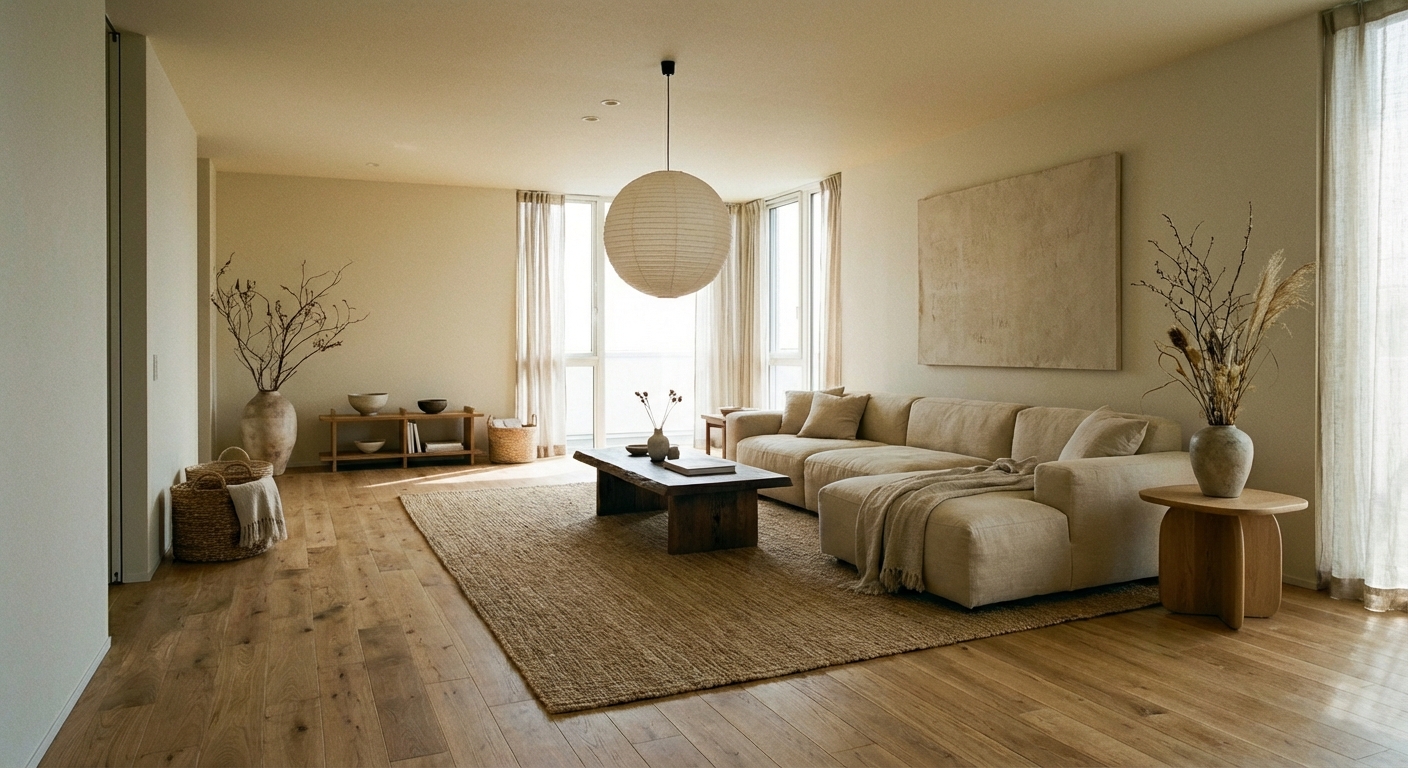
Japandi is the calm middle between two traditions that already value restraint. It keeps Scandinavian warmth — pale wood, soft textiles, generous light — and marries it with Japanese discipline — low furniture, quiet palettes, natural materials, and a commitment to negative space (ma). The result feels serene without feeling sterile. The style rose in popularity after 2015 as a response to both cluttered mid-2010s boho and cold all-white minimalism, and the principles actually work across rooms. Furniture sits lower than Western norms — a sofa 32 inches deep and 15 inches off the floor reads more grounded than a 36-inch-deep, 18-inch-off sofa. Palette leans earthier than pure Scandinavian: warm whites (Farrow & Ball Strong White, Benjamin Moore Navajo White), natural oak and ash, clay and plaster tones, one black accent (a door frame, a chair, a pendant), and muted moss or soft indigo for interest. Materials skew toward the handmade: washi paper pendants, stoneware ceramics with visible wheel marks, irregular-weave linen, and raw-finished wood with visible grain. Empty space is a feature — resist the urge to fill every shelf.
Key elements of japandi style
- Low, grounded furniture
- Natural wood (oak, ash, walnut)
- Muted earth palette
- Handmade textures
- Intentional empty space
- Soft, diffuse lighting
Signature palette
Japandi rooms usually pull from a tight palette. Start with these and introduce bolder accents only once the base works in your lighting.
Popular rooms for this style:
Japandi ideas by room
Narrow a style direction to the room you are actually redesigning.
Bedroom · japandi
All bedroom ideas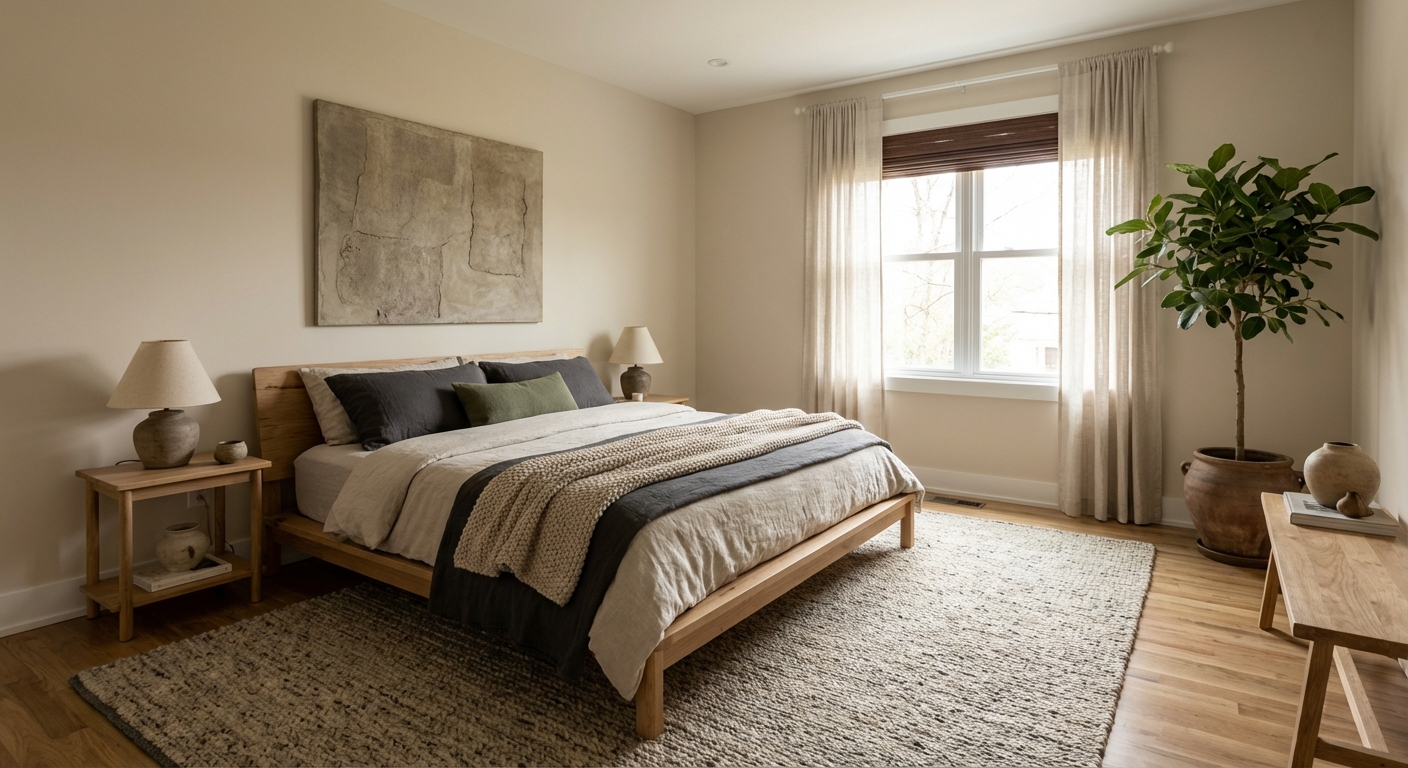
Living Room · japandi
All living room ideasHome Office · japandi
All home office ideas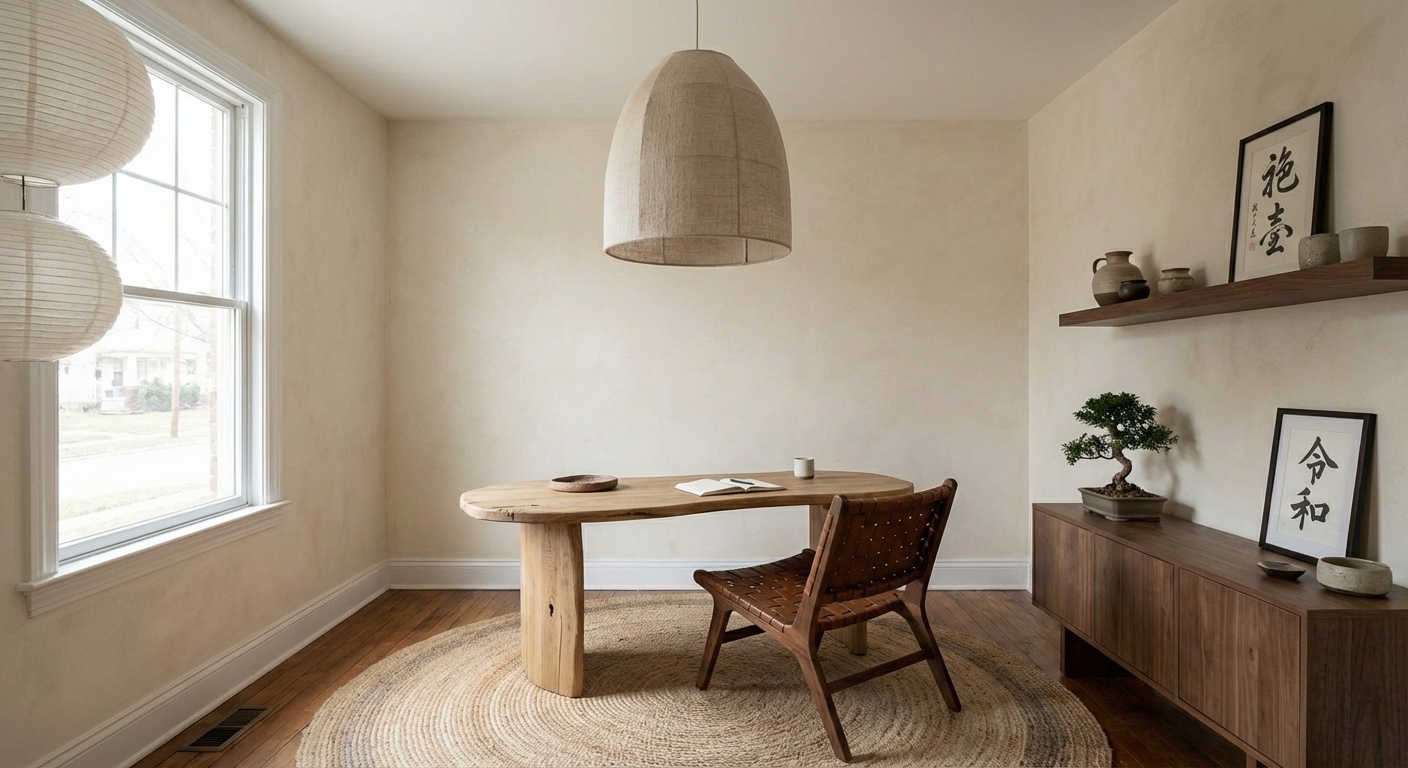
Dining Room · japandi
All dining room ideas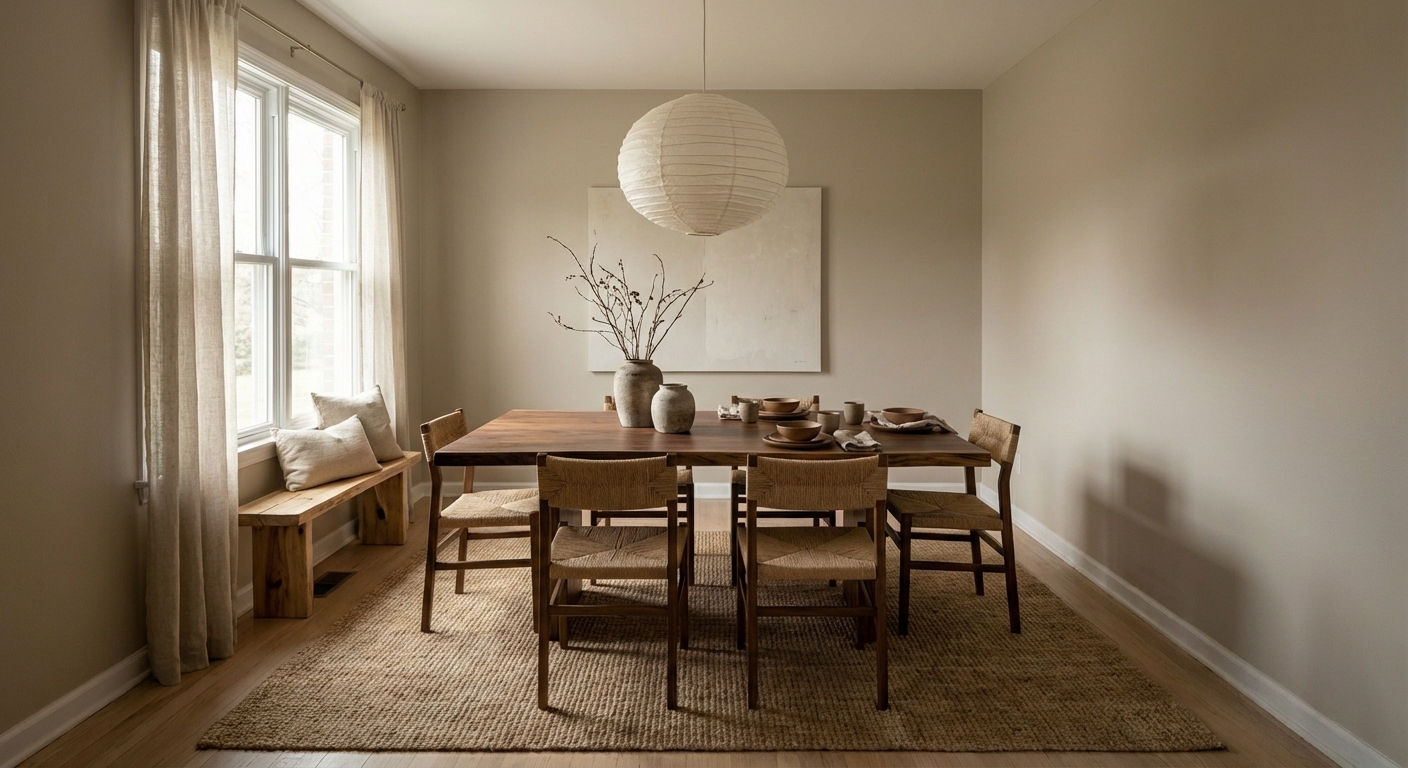
More japandi ideas
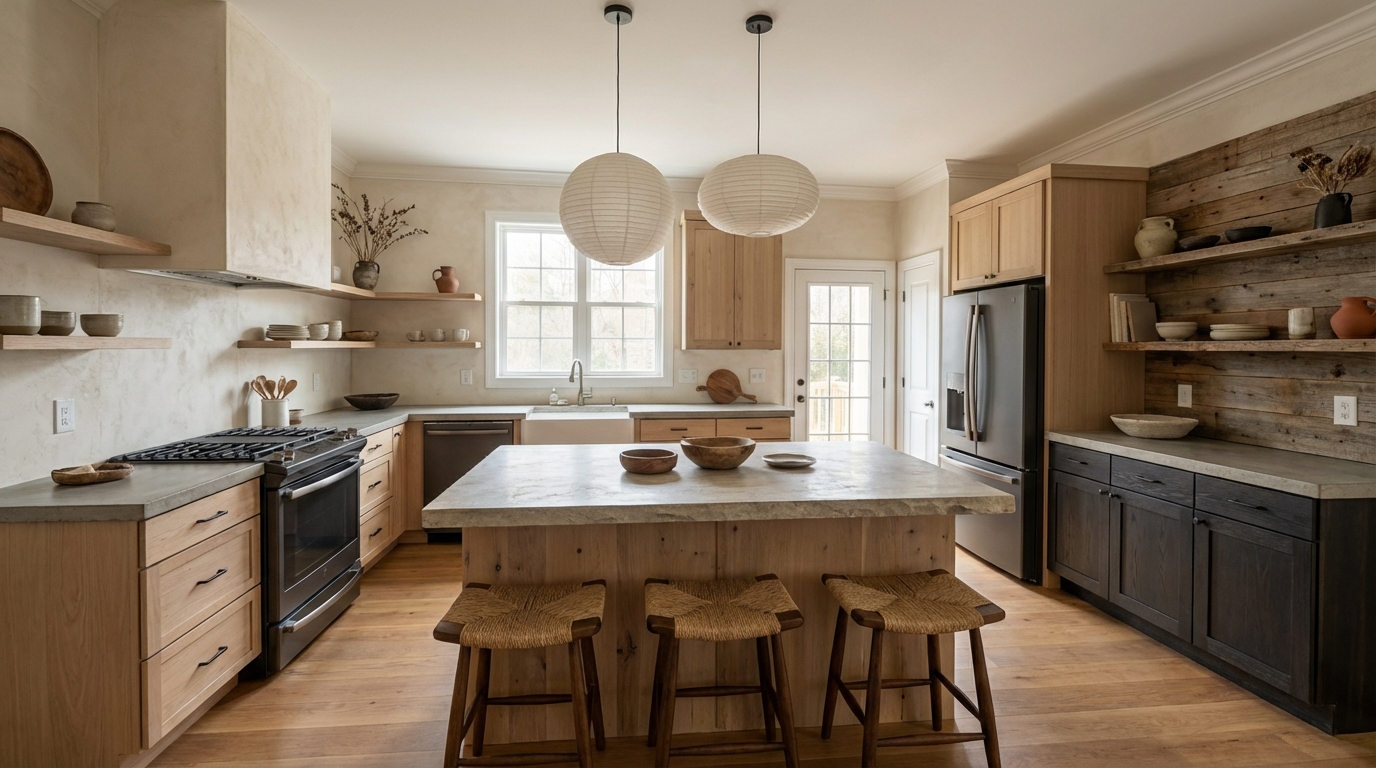
Japandi Kitchen Design Ideas
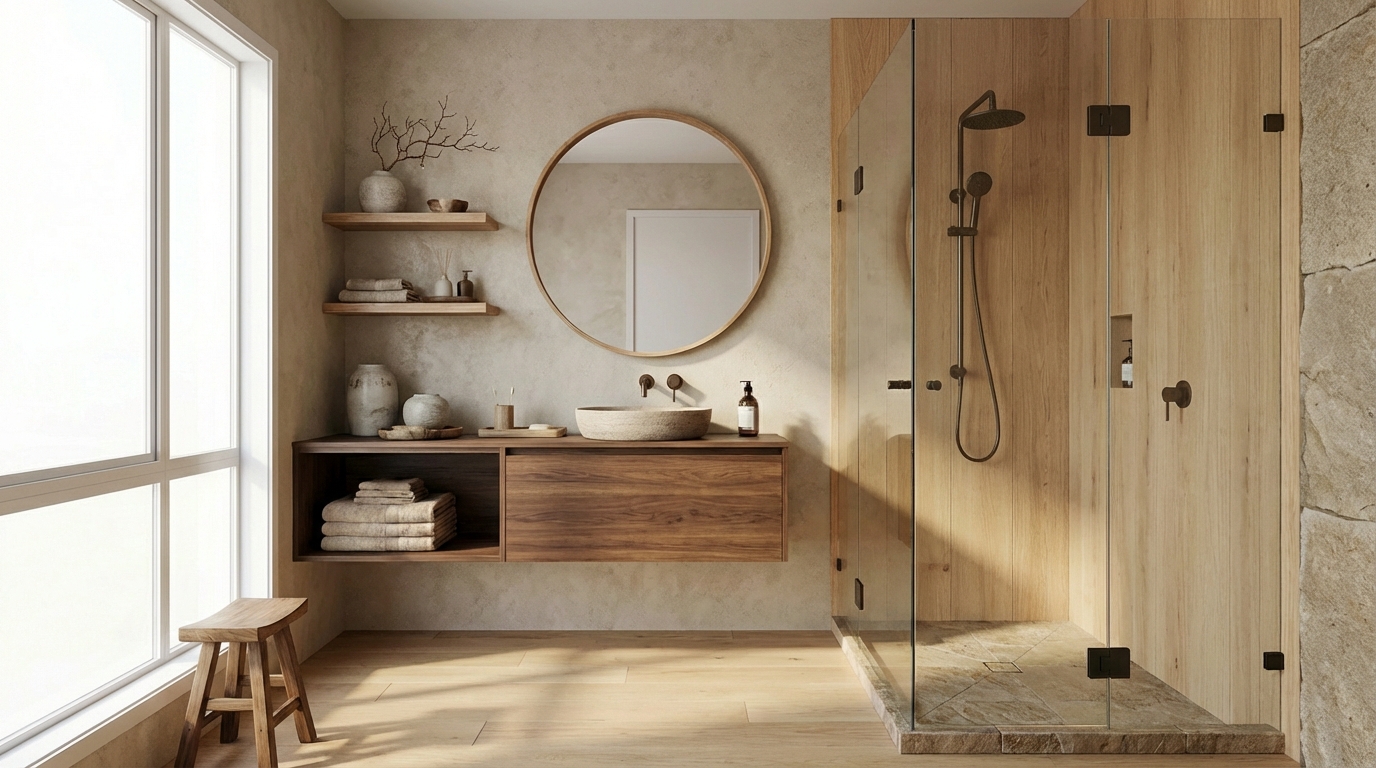
Japandi Bathroom Design Ideas
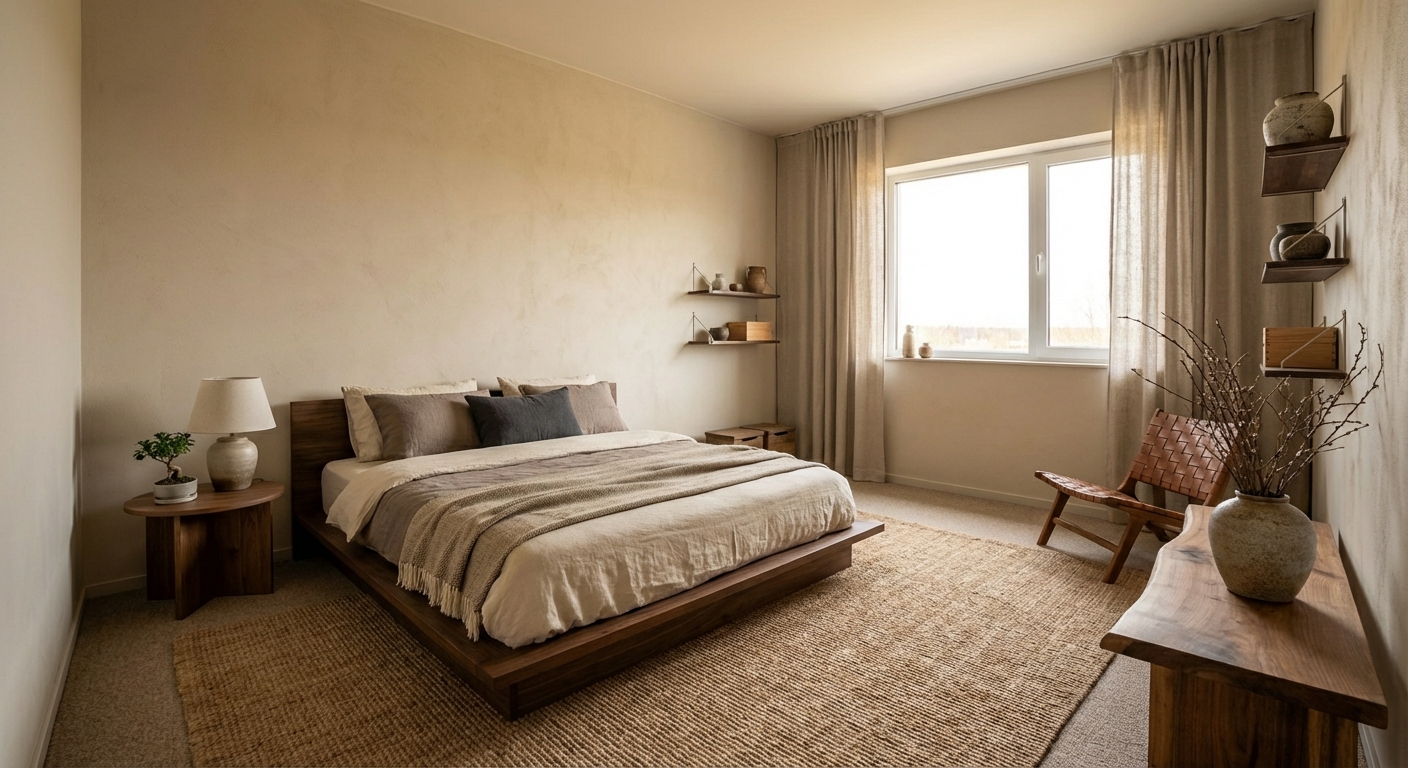
Japandi Kids Room Design Ideas
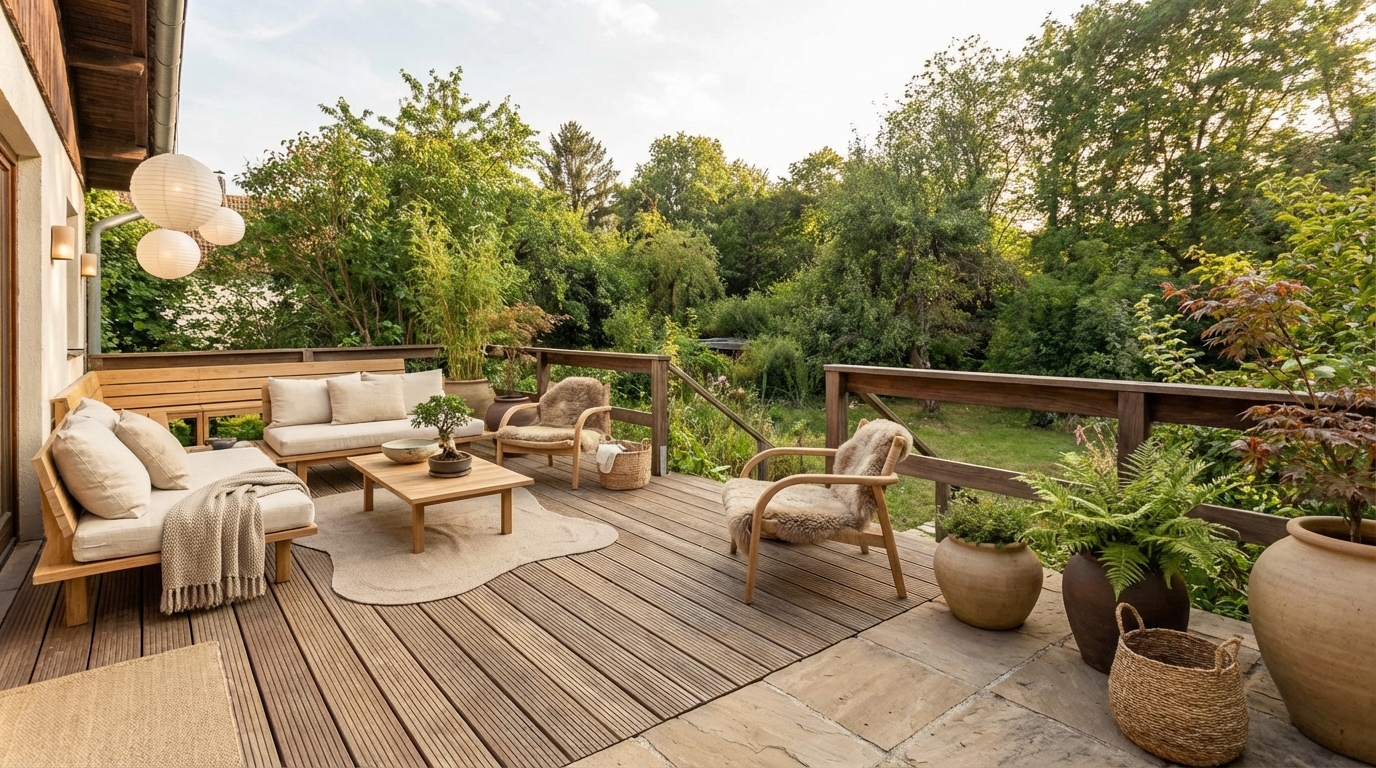
Japandi Patio Design Ideas
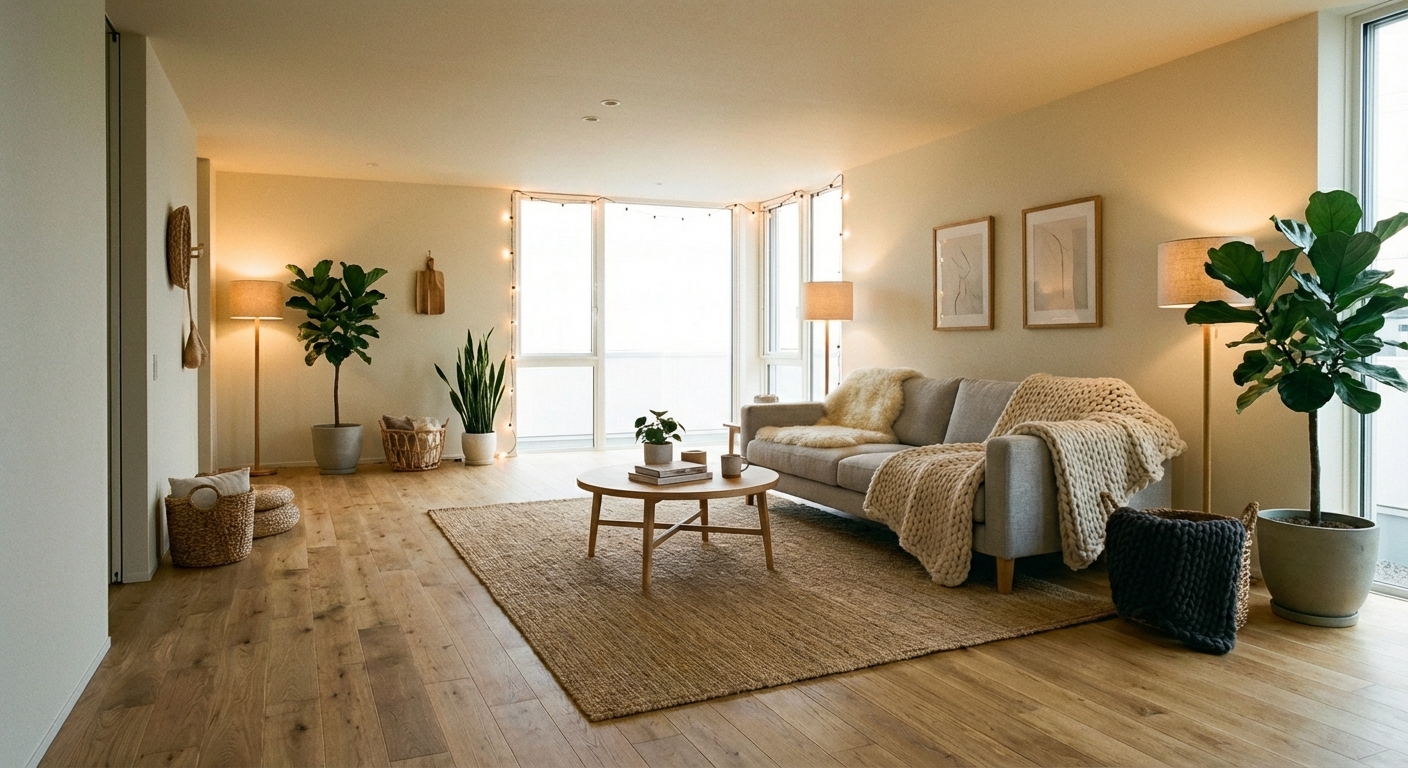
Scandinavian vs Japandi: Which Style Is Right for You?
Japandi vs Minimalist: Warmth vs Purity
Wabi-Sabi vs Japandi: Japanese-Influenced Styles Compared
Complete Guide to Japandi Style
Trending Japandi Interior Designs for 2026
Try japandi on your room with AI
Styles look different in every room. Upload a photo, choose japandi, and compare the palette, furniture scale, and material direction on your actual space before buying anything.
Quick answers about japandi style
Move between style and room views or preview the direction on your space.
Frequently Asked Questions
Q1 Is Japandi just Scandinavian with darker wood?
No. Japandi usually brings lower furniture (sofa 15-16 inches off the floor instead of 18), more intentional negative space, and a slightly earthier palette (clay, moss, warm white instead of chalk white and dusty blue). The two share principles, but Japandi has a quieter, more grounded feel.
Q2 Does Japandi work in small rooms?
It works extremely well. Low furniture, restrained palettes, and disciplined editing make Japandi one of the most effective styles for making small rooms feel calm and composed. A 100-square-foot bedroom looks larger with a low-profile platform bed than with a tall upholstered headboard.
Q3 Can I mix Japandi with modern or industrial?
Yes. Japandi pairs naturally with modern because both favor clean lines and honest materials. It can contrast effectively with industrial when industrial brings the structure (brick, steel) and Japandi brings the softness (washi paper pendant, linen textiles, handmade ceramic).
Q4 Can AI preview Japandi?
Yes — it is a popular direction with strong representation in AI training data, so previews tend to be high quality.
Preview japandi on your real rooms with AI
Upload a photo in the free visualizer and preview the look before you buy paint, furniture, or a renovation.